
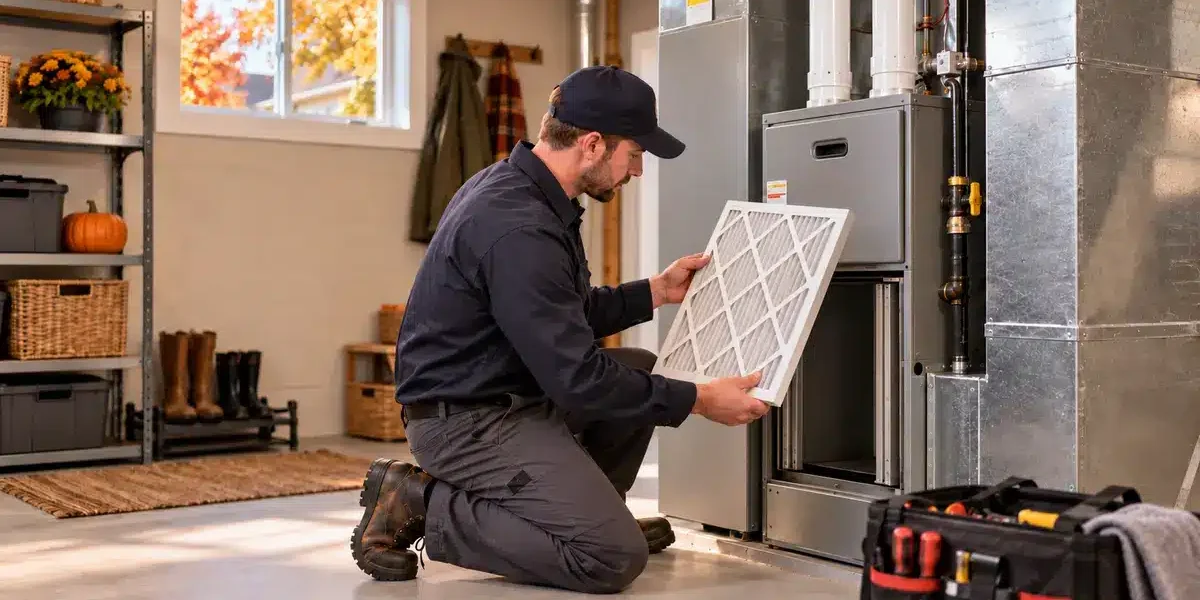
The first truly cold morning of the season is not when you want to discover that your furnace has a problem.
After sitting mostly idle through the warmer months, your heating system is about to return to regular duty for another Ottawa winter. A little preparation before the temperatures drop can help improve airflow, catch potential issues early, and give you greater confidence that your furnace is ready when you need it.
Some fall furnace maintenance is simple enough for homeowners to handle themselves. Other checks belong with a qualified HVAC technician. This furnace maintenance checklist will help you work through both, so your home is ready before heating season gets into full swing.
Why Fall Furnace Maintenance Matters in Ottawa
Ottawa furnaces have a demanding job.
Once colder weather settles in, your heating system may run every day for months at a time. A problem that seems minor in September can become much more disruptive when the temperature is well below freezing.
Fall is an ideal time to give your furnace some attention because you can test the system before you depend on it around the clock. It also gives you an opportunity to address maintenance or repairs before the busiest part of heating season.
Natural Resources Canada recommends maintaining home heating equipment regularly and notes that late summer, before the heating season begins, is a good time to have heating equipment serviced.
Your Fall Furnace Maintenance Checklist
You do not need to be an HVAC technician to spot some of the most common furnace maintenance issues. Start with the basics around your home, then bring in a professional for the components and safety checks that require specialized knowledge.
1. Check Your Furnace Filter
Start with one of the simplest and most important maintenance tasks: your air filter.
A dirty filter restricts airflow, which can make your heating system work harder to move warm air throughout your home. Natural Resources Canada recommends inspecting, cleaning, or replacing furnace filters regularly and following the manufacturer’s instructions for your particular system.
If you cannot remember the last time your filter was changed, now is a good time to take a look.
Make sure you are also using the correct filter size and type for your furnace. A filter that is too restrictive for the system can create airflow problems even when it is brand new.
2. Test Your Thermostat Before the Cold Weather Arrives
Do not wait for the first freezing night to find out whether your thermostat and furnace are communicating properly.
Switch the thermostat to heating mode and raise the temperature a few degrees above the current room temperature. Your furnace should start and begin delivering warm air through the vents.
Pay attention to whether the system starts normally and whether the temperature in the home responds as expected.
If the furnace does not turn on, cycles unusually, or struggles to reach the set temperature, it may be worth having the system checked before winter.
3. Make Sure Your Vents and Returns Are Clear
Walk through the house and check your supply vents and return-air grilles.
Furniture, rugs, curtains, boxes, and other household items can accidentally block airflow, particularly after rooms have been rearranged. Keeping vents and returns unobstructed allows heated air to circulate more effectively throughout the home.
Natural Resources Canada specifically recommends keeping warm-air vents and return grilles clean and free from obstructions as part of maintaining a forced-air heating system.
A quick vacuum around dusty registers can also help keep accumulated debris from circulating once the furnace begins running regularly again.
4. Clear the Area Around Your Furnace
Your furnace should have a clear, accessible area around it.
Avoid using the mechanical room as storage space for cardboard boxes, cleaning products, paint, or other items that could interfere with access to the equipment or create unnecessary hazards.
You should also be able to reach the furnace easily if the system requires inspection or service.
This is a five-minute fall cleanup that can make future maintenance considerably easier.
5. Check Accessible Exterior Vents
Many high-efficiency furnaces use intake and exhaust pipes that terminate outside the home.
Take a quick look at any accessible furnace venting and make sure leaves, debris, vegetation, or other obstructions have not accumulated around the openings during the summer and fall.
As winter progresses, these areas should also remain clear of snow and ice.
Do not dismantle or modify any furnace venting yourself. If something looks damaged, loose, or unusual, have it inspected professionally.
6. Listen to Your Furnace
When you turn the furnace on for the first few times this season, take a moment to listen.
You know the normal sounds of your home better than anyone. New rattling, banging, grinding, squealing, or repeated clicking can indicate that something is not operating as it should.
Not every unusual noise means you need a new furnace, but it is worth investigating a sound that suddenly appears or becomes more noticeable.
We provide professional furnace repair and maintenance in Ottawa, including service for gas furnaces, heat pumps, boilers, and forced-air heating systems.
7. Pay Attention to Unusual Smells
It is not unusual to notice a brief dusty smell the first time a furnace runs after months of inactivity.
Persistent or unusual odours are different.
Burning, metallic, electrical, or gas-like smells should not simply be ignored in the hope that they disappear. Shut the system down when appropriate and contact a qualified professional if you are concerned about an unfamiliar or persistent smell.
If you suspect a gas leak or another immediate safety issue, leave the area and follow the appropriate emergency procedures rather than attempting to diagnose the problem yourself.
8. Test Your Carbon Monoxide Alarms
A fall furnace checklist should include the safety equipment around your heating system too.
Test your carbon monoxide alarms according to the manufacturer’s instructions and replace batteries or expired units when necessary.
Homes with fuel-burning appliances require properly installed carbon monoxide alarms, and these devices are an important layer of protection throughout the heating season.
This is also a good time to test your smoke alarms so both systems are ready for the colder months ahead.
9. Schedule Professional Furnace Maintenance
Homeowner checks are useful, but they do not replace professional service.
A qualified HVAC technician can inspect components you should not attempt to service yourself, including combustion equipment, controls, electrical connections, gas connections, burners, and the heat exchanger.
Natural Resources Canada recommends that contractors check gas connections, gas pressure, burner combustion, the heat exchanger, and system controls when preparing heating equipment for winter.
Professional maintenance can also uncover developing problems before they turn into a no-heat call on a cold January night.
What Can a Professional Furnace Tune-Up Catch?
Many furnace problems develop gradually.
A component can begin wearing out without immediately stopping the system altogether. Airflow can become restricted. Burners can require attention. Controls can begin behaving inconsistently. Small issues can be easy to overlook when the furnace is only running occasionally.
Professional maintenance gives a technician an opportunity to assess how the system is operating before those issues become more serious.
It can also help answer an important question: is your furnace simply due for routine maintenance, or is there something that should be repaired before winter?
Top Hat Home Comfort Services works on all makes and models of heating equipment, and its HVAC team includes licensed technicians who provide furnace maintenance, repair, and replacement services throughout the Ottawa area.
Signs Your Furnace May Need More Than Routine Maintenance
Maintenance helps keep a properly functioning system in good condition, but it cannot solve every heating problem.
Pay closer attention if you notice:
- Uneven temperatures throughout your home. Some rooms remain noticeably colder even when the furnace is running.
- Frequent cycling. The furnace repeatedly turns on and off without completing a normal heating cycle.
- Unusual or increasingly loud noises. New sounds may indicate a mechanical or airflow problem.
- Difficulty starting. The furnace takes several attempts to ignite or does not respond consistently.
- Weak airflow from your vents. Warm air is being produced, but it is not circulating effectively.
- Repeated repairs. Frequent service calls may indicate that an older furnace deserves a broader assessment.
- The system cannot maintain a comfortable temperature. Your furnace runs for long periods but the house still does not feel warm enough.
None of these symptoms automatically means your furnace needs to be replaced. In many cases, professional repair may be all that is required.
Getting the system assessed early simply gives you more options than waiting until it stops working altogether.
Don’t Wait for the First Ottawa Cold Snap
There is a big difference between testing your furnace on a cool September evening and discovering a heating problem when an Ottawa winter is already underway.
A simple fall furnace maintenance checklist can help you catch obvious issues, improve airflow, and make sure the basics around your heating system are taken care of. Pair those homeowner checks with professional maintenance, and you will be in a much better position to head into winter with confidence.
After more than 50 years serving Ottawa-area homeowners, Top Hat Home Comfort Services provides furnace maintenance, repair, replacement, and 24/7 emergency heating service when problems cannot wait.
Get your heating system ready before winter arrives by contacting us to schedule professional furnace maintenance or service.